
Tech CoLab
Bridge the Gap.
Empower their Decisions.
Empower their Decisions.
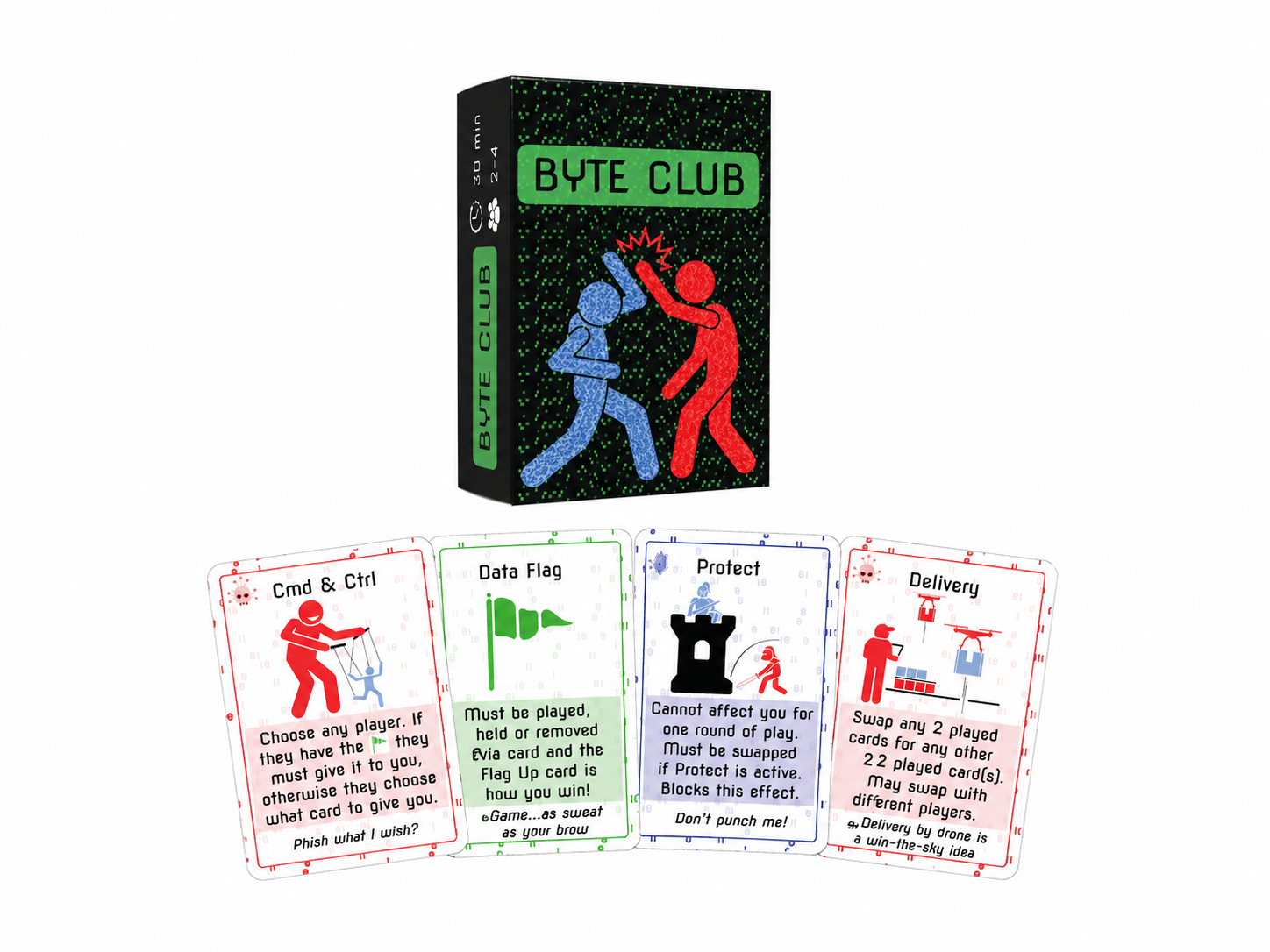
Experience the Cycle of Cyberwarfare from both sides. Race to steal the Data Flag while defending your own.
This game is only supported on larger screens. Switch to a tablet, laptop, or desktop to play.
Share the room code to invite players, or play solo vs a bot.
Have a room code? Enter it below to join.
Create and manage multiple game rooms at once. Players join using the shareable link for each table. You are added as an observer to each room.
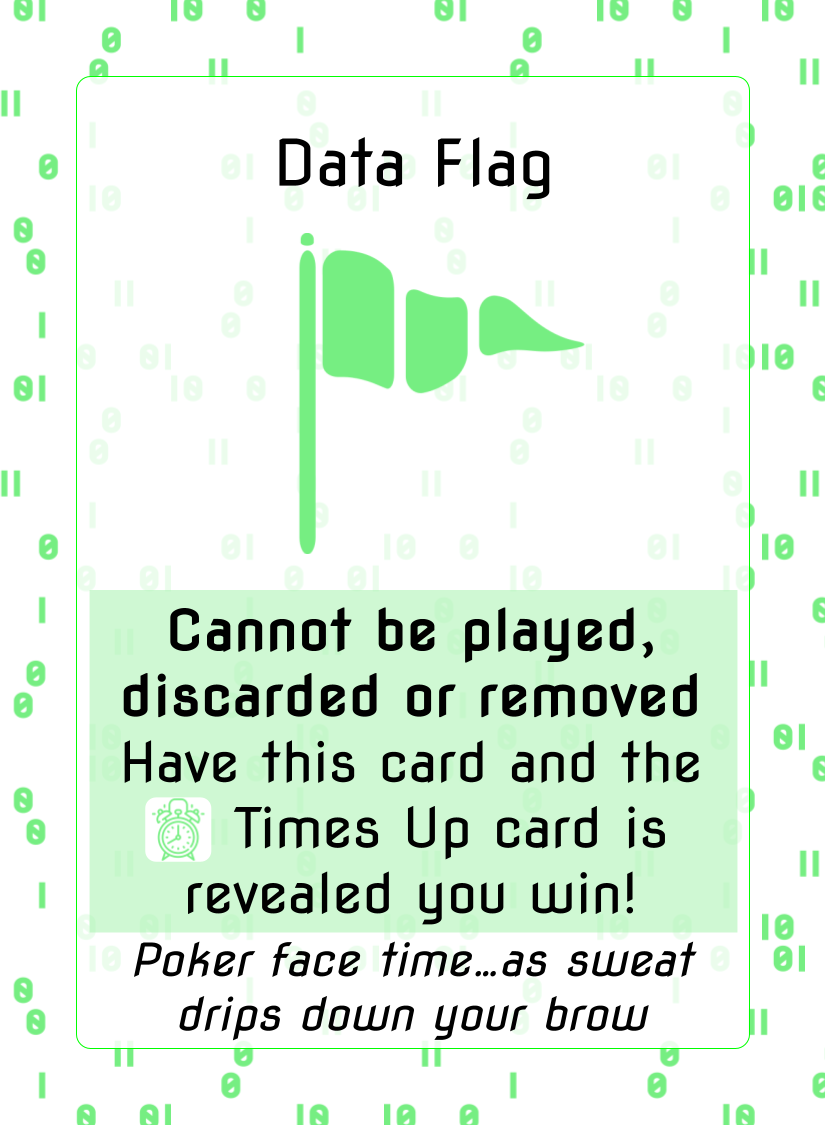
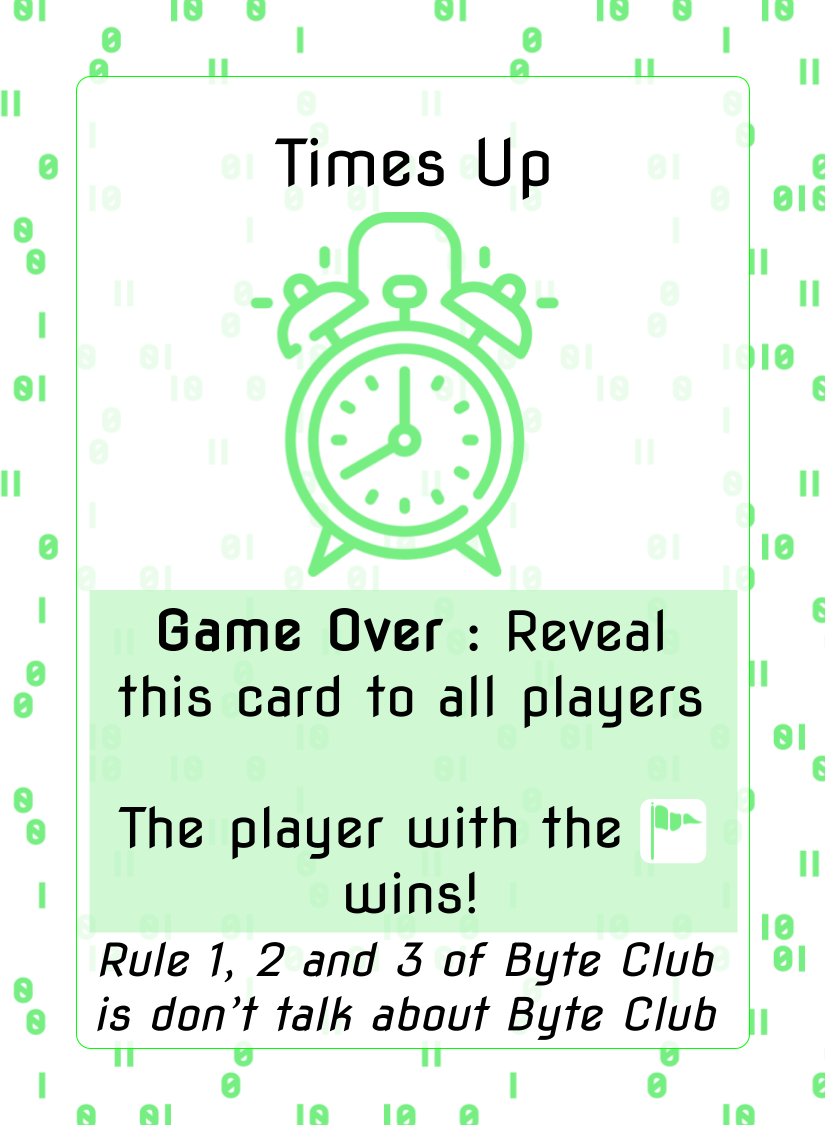
Win by one of two conditions:
1. Hold the Data Flag when Times Up is drawn from the deck.
2. Play one of every attack type (Kill Chain) AND every defend type (NIST) in front of you, including the earned Govern and Action Objectives cards.
Opponents bar: top row shows each opponent's panel: hand size, played Kill Chain & NIST slots, and whose turn it is.
Status strip: the bar directly below opponents shows five game-wide indicators: Draw Deck count, Data Flag location, Times Up state, Govern availability, and Action Objective status. Click any ⓘ for details.
Your Hand (left 2/3): your cards are here. Click one to play it on your turn. Active action prompts also appear in this area.
Cards in Front of You (right 1/3): your played area. The  Cyber Kill Chain row tracks attack cards; the
  NIST row tracks defend cards. Dotted slots show what you still need.
Activity feed: the narrow column between your hand and played area logs every game event.
1. Play cards: click cards from your hand to play them. You can play multiple cards per turn.
2. End turn: click End Turn when done.
3. Draw: you automatically draw 1 card.
4. Discard: if you have more than 6 cards, click one to discard.
Kill Chain. Attack CardsATK Recon: peek at a hand or swap played attack cards
ATK Weaponize: cancel an opponent's defend card (played out of turn)
ATK Delivery: swap up to 2 played cards with opponents
ATK Exploit: blindly steal 1 card from a target
ATK Install: block a target from playing defend cards
ATK C2: steal the Data Flag, or target gives you a card
NIST Framework. Defend CardsDEF Identify: reveal who has the Data Flag or swap played defend cards
DEF Protect: block attacks until your next turn
DEF Detect: view and reorder the top 5 deck cards
DEF Respond: cancel an attack targeting you (played out of turn)
DEF Recover: draw until you have 5 cards in hand
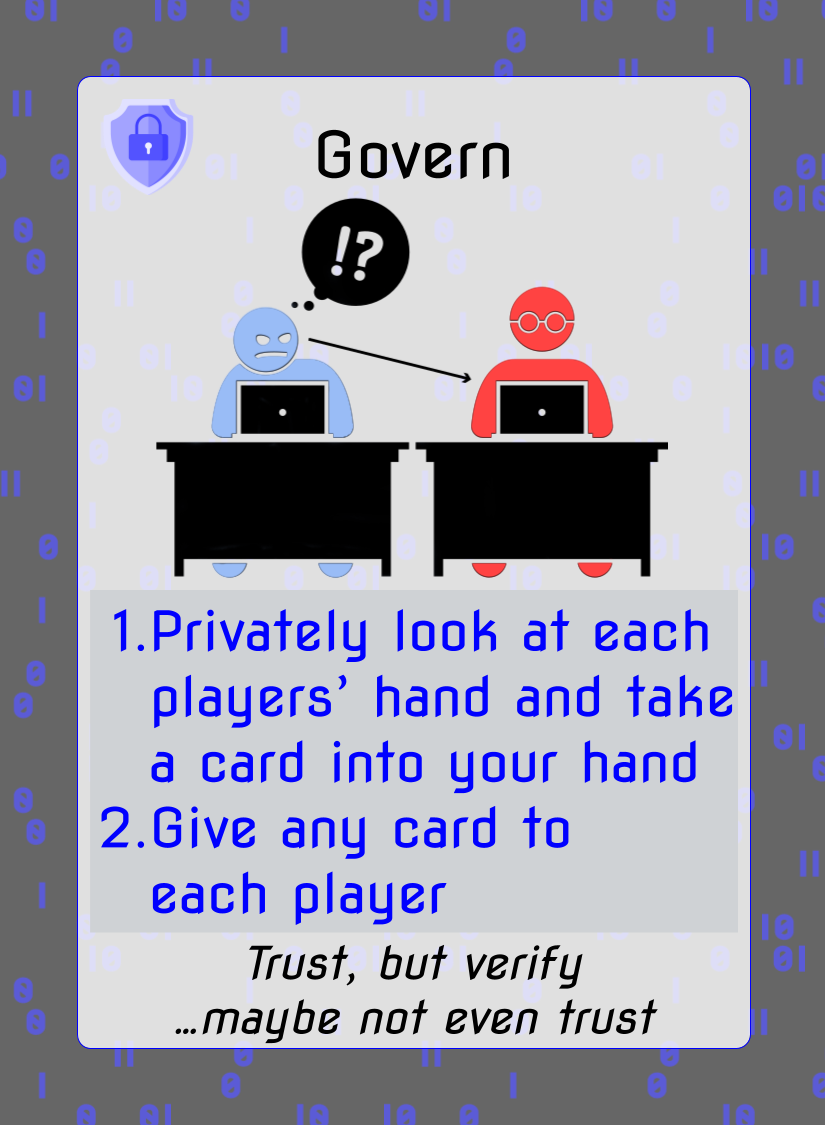
GOV Govern: earned by playing all 5 NIST types. Look at all hands, take 1 card from each player, then give 1 back to each.
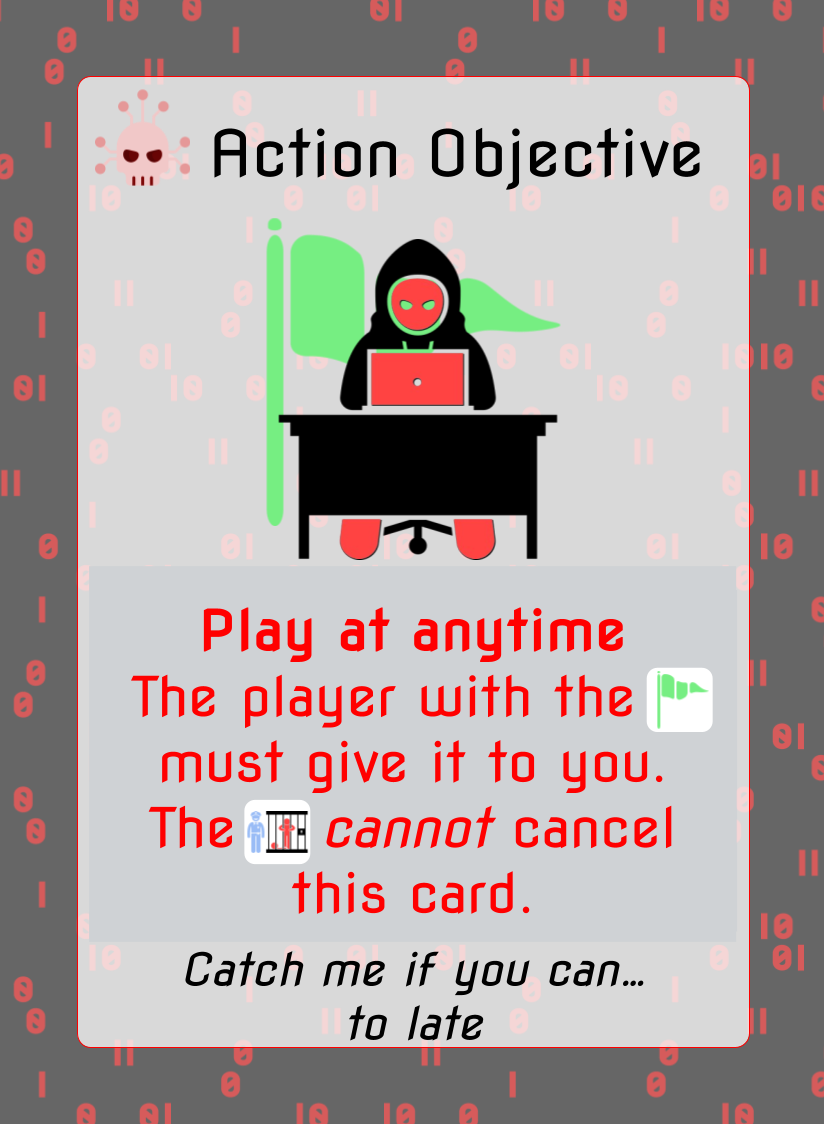
OBJ Action Obj.: earned by playing all 6 Kill Chain types. The Data Flag holder must give it to you. Cannot be cancelled.
• Click the ⓘ icons throughout the game for quick help on any element.
• Dotted outlines in your Cards in Front of You show which slots you still need to fill.
• Watch the Activity feed for opponent actions and game events.
• The status strip updates live. Keep an eye on the Data Flag location!
Rotate your device to landscape
for the best tutorial experience.
Loved it? The physical game is where Byte Club really shines.
Get the Physical Game →